© 2026 LUCILLA ROSE MARIOTTI. All Rights Reserved.


Lumière du Temps
Streaming on all platforms
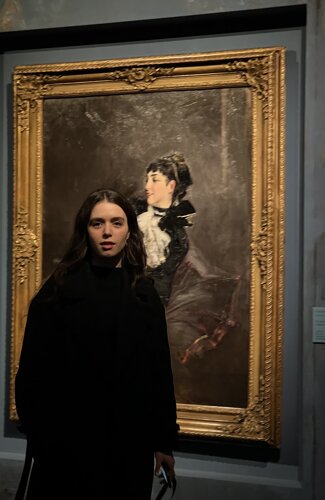
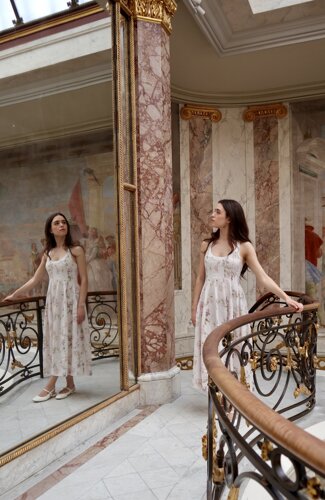
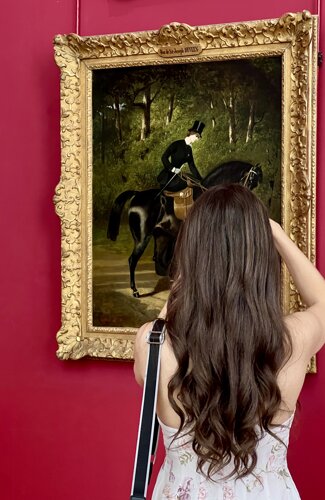
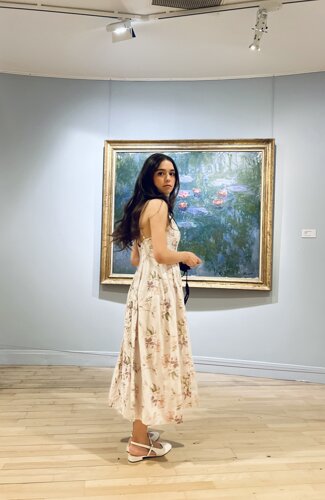
Inspired by the golden elegance of the Belle Époque and the fluid brushstrokes of Giovanni Boldini, Lumière du Temps unfolds like a single day told in music, tracing the imagined journey of one of his painted heroines as if she had stepped out of the canvas, into sound. From the freshness of morning light to the shimmering melancholy of twilight and the velvet shadows of night, each piece captures a fleeting moment, a feeling, a light. Performed on a 1709 Stradivari from the luthier’s legendary Golden Period, this album is a poetic reverie and a musical stroll through the dreams and colours of the past.

Video of the Day: Lucilla Rose Mariotti and Alessio Enea perform D'Ambrosio's 'Romance' | Gramophone


“Next Gen”: Violinist Lucilla Rose Mariotti
Luisa Santacesaria presents “Next Gen”, featuring violinist Lucilla Rose Mariotti
28 November 2025
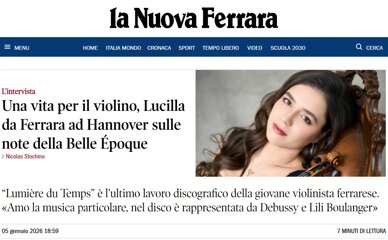
“A Life with the Violin: Lucilla, from Ferrara to Hanover, to the Sounds of the Belle Époque”
Lucilla Rose Mariotti returned to Ferrara to present her new album, Lumière du Temps, in concert at the Ridotto of the Teatro Comunale Abbado. The young violinist speaks to La Nuova Ferrara about the origins of her latest recording and the ideas and inspirations behind it.
Lumière du Temps is your new album. What kind of album is it?
It is a project that began several years ago as a concert programme. Then life led me to win a competition in Vienna that gave me the opportunity to play a magnificent Stradivarius for two years. From there came the idea of capturing on record the sound of that violin as it was in my hands. At the same time, the visual inspiration came after seeing a Boldini exhibition at Palazzo dei Diamanti. I am fascinated by translating music into images, and I began to wonder what the soundtrack to his time might have been.
Is that where the idea of setting the album in Belle Époque Paris came from?
Exactly. Boldini painted the world of the Parisian salons, where music played a central role. I then discovered Alfredo D’Ambrosio, a Neapolitan composer who was a genuine celebrity in Parisian salons at the time, rather like Boldini himself. Today he is almost forgotten, and I loved the idea of bringing this music back to light alongside other unusual works from the period. I love experimenting and performing lesser-known repertoire, especially in the recording studio, because recordings are what remain with us for a lifetime.
Does the tracklist tell a story?
The album traces, in an imaginary sense, a day in the life of a Belle Époque lady: it opens with Chanson de Matin and closes with Chanson de Nuit. I also wanted to add Adieu, which I think of as a little gem, a rarely performed two-minute piece representing a final farewell. It is a way of evoking the end of a luminous era that would soon be swept away by a much darker period in European history.
There is also a strong personal element to the album.
It reflects my own roots as well: my mother is English and my great-grandmother was French. This cultural mixture is part of who I am, and it is reflected in my choice of repertoire. Recordings endure over time, and I felt the need to leave something behind that genuinely represented me.
The album was recorded with pianist Alessio Enea. How did your collaboration begin?
We met at the Royal College of Music in London, where we were both fellows. Mine was a fellowship centred on a project that led me to work on synaesthesia, a neurological condition in which people may hear music and see colours. Alessio’s fellowship involved accompanying string players. I told him about the idea for Lumière du Temps and he immediately said yes. It was a very natural musical partnership.
[…]
One of the tracks is a Debussy rarity.
That is probably the most curious behind-the-scenes story of the album. I was looking for a little-known piece by Debussy and spent entire days in the Royal College library. On the final page of a large volume I found Valse romantique. I fell in love with it immediately, and it became part of the project.
Another distinctive feature of the album?
Definitely the inclusion of works by Lili Boulanger, a French composer whose music, as a woman, was performed very little, although it is now being rediscovered. Her sister was also very well known, and at the time it was unusual for two women in the same family both to achieve such success. She also had the misfortune of dying very young. As a female musician, I am very proud to have included two of her works on this album.
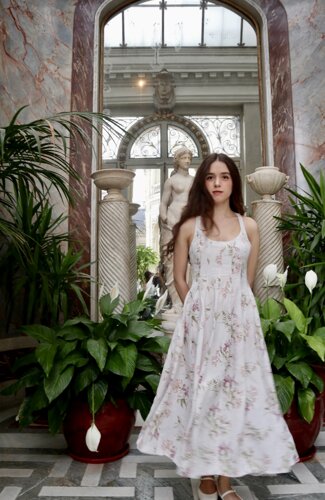


On this disc, Lucilla Rose plays on a 1709 Antonio Stradivari violin from the Goh Family Collection.


